



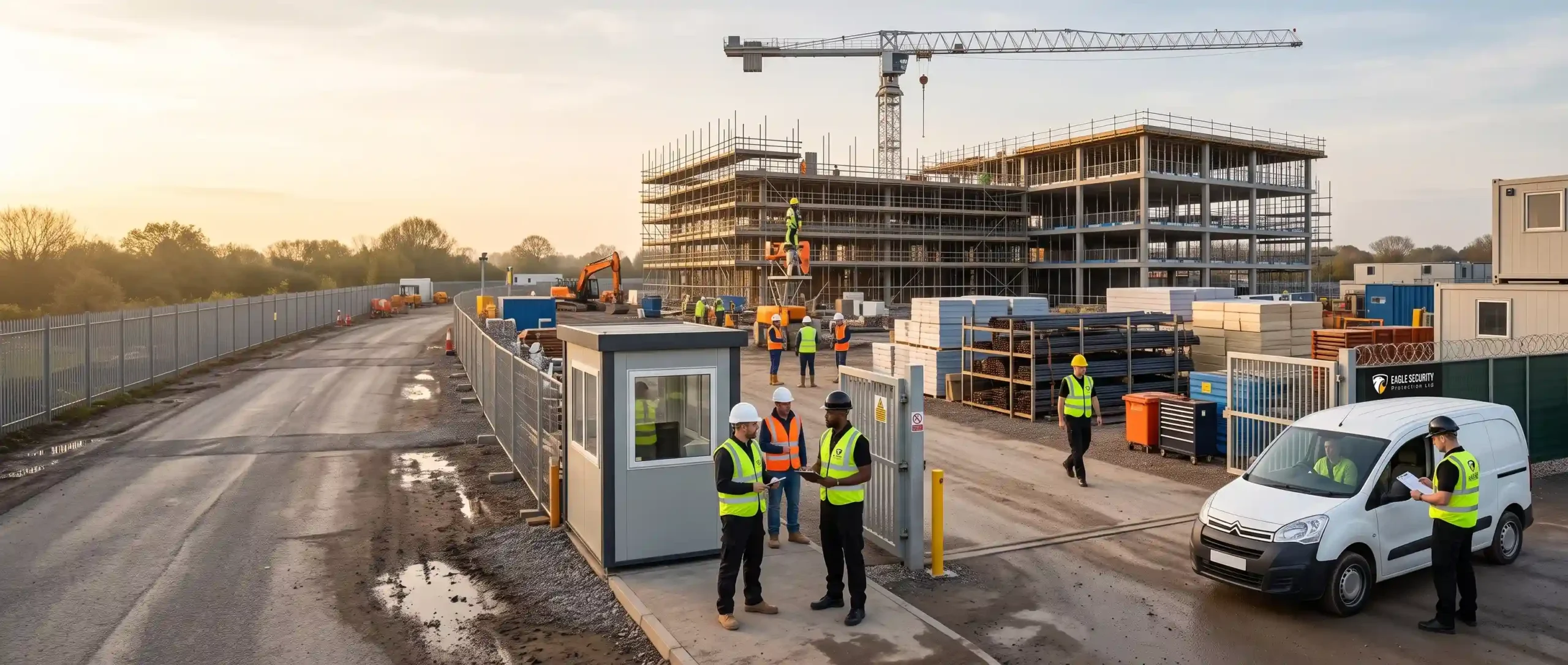
How to Secure Construction Sites Without 24/7 On-Site Guards
Securing a construction site without 24/7 guards is achieved via a layered defence model: solid 2.4m timber hoarding, secure compound zoning for plant and tools, solar-powered AI CCTV towers with live audio intervention, and randomized SIA mobile security patrols. This hybrid approach delivers robust protection while cutting weekly security costs by 50% to 65%.
Construction site theft costs the UK construction industry over £800 million annually. Plant machinery, red diesel, generators, hand tools, and copper cabling are stolen daily from vulnerable compounds across Birmingham, Coventry, Wolverhampton, and the West Midlands.
While continuous 24/7 static manned guarding provides maximum physical deterrence, tight project margins on small-to-medium developments often make 168 hours of weekly guard cover financially unviable. Fortunately, modern contractors can implement high-efficacy construction site security strategies that deliver comprehensive protection without the expense of a permanent guard cabin.
Protect Your Project On Time & Within Budget
Eagle Security Protection provides tailored hybrid site security (mobile patrols, CCTV towers, access turnstiles) with a guaranteed 60-minute emergency dispatch across the West Midlands.
The 4-Layer Defence Model for Building Sites
Perimeter Fortification & Anti-Climb Hoarding
Replace loose Heras fencing with continuous 2.4m anti-climb timber hoarding or bolted steel mesh panels. Ensure vehicular access gates are fitted with anti-jemmy shrouds and heavy-duty CEN grade 5 padlocks. Eliminate climb points near cabins and trees.
Zoned Plant & Tool Storage Compounds
Create an internal secondary compound within the site for excavators, telehandlers, and fuel bowsers. Park heavy machinery in a defensive circle enclosing smaller equipment. House hand tools inside reinforced steel ISO containers fitted with internal locking bars.
Solar AI CCTV Towers with Audio Challenge
Install self-powered solar CCTV mast towers equipped with AI human-detection algorithms and 360-degree thermal cameras. When an intruder breaches the boundary, control room operators issue an immediate live loudspeaker challenge and dispatch patrol responders.
Randomized SIA Mobile Patrols & Keyholding
Supplement electronic surveillance with marked mobile security patrol vehicles conducting 3–6 unpredictable physical inspections each night. Officers check locks, search compound corners, and scan RFID checkpoints.
⚡ Instant Budget Estimator
Estimate Your Construction Site Security Budget
Calculate exact weekly rates for SIA-licensed gatemen, plant protection officers, and GPS-tracked mobile patrol sweeps.
📊 Open Cost Calculator →
Construction Site Security: Cost & Protection Comparison
Estimate Your Construction Site Security Budget
Calculate exact weekly rates for SIA-licensed gatemen, plant protection officers, and GPS-tracked mobile patrol sweeps.
Review the operational and cost differences between 24/7 manned guarding and a hybrid security model:
| Security Strategy | Estimated Weekly Cost | Deterrence Capability | Ideal Construction Phase |
|---|---|---|---|
| 24/7 Full Static Guarding (168 hrs) | £2,800 – £3,600 / wk | Maximum | High-value fit-out, city centre, major infrastructure |
| Hybrid: Solar CCTV + Mobile Patrols | £650 – £1,100 / wk (Save 65%) | Very High | Groundworks, structural framing, residential schemes |
| Mobile Patrols Only (4 visits/night) | £200 – £350 / wk | Moderate | Demolition, low-risk perimeter clearance |
Request a Free Construction Site Security Audit & Proposal
Tell us about your project location and timeline to receive a custom security specification.
Frequently Asked Questions: Securing UK Construction Sites
Frequently Asked Questions
Direct answers on commercial security standards, SLAs, and guard dispatch in the UK.
Yes. By implementing a layered defence model—combining 2.4m timber hoarding, locked plant storage compounds, solar-powered AI CCTV towers with audio talk-down, and randomized SIA mobile security patrols—contractors can achieve 90%+ crime reduction at a fraction of full-time static guarding costs.
The groundworks phase (due to plant machinery and fuel theft) and the second-fix fit-out phase (when copper piping, boilers, electrical wiring, and high-value tools are stored on site before handover) represent the highest risk periods.
A full 24/7 static guarding rota (168 hours/week) typically costs £2,800–£3,600/week. A hybrid approach of remote CCTV towers paired with nightly mobile patrol inspections costs approximately £650–£1,100/week, saving over 60% on security budgets.
Eagle Security Protection provides a guaranteed 60-minute emergency security dispatch across Birmingham and the West Midlands to secure compromised fences or provide overnight static cover.
Summary: Secure Your Project with Eagle Security Protection
Don't allow material theft or plant vandalism to derail your construction programme. Eagle Security Protection provides comprehensive, audit-ready security solutions tailored to your site's exact risk profile.
Call our dispatch desk on 0121 240 8586 or request a site security consultation online.