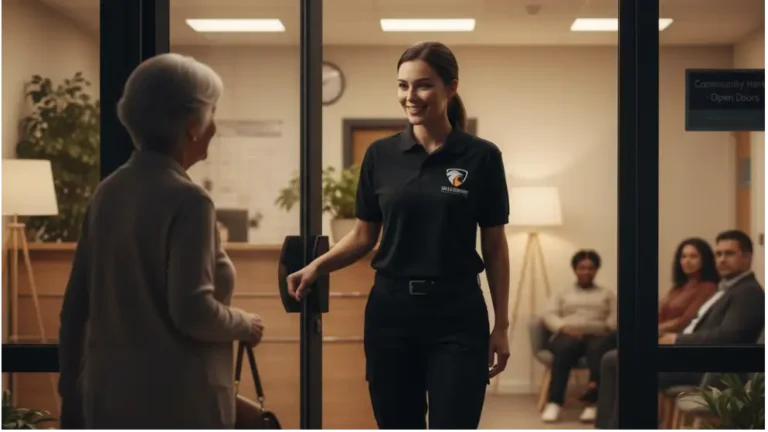
The Role of Female Security Guards in Women’s Shelters & Safe Spaces
In today’s security landscape, female security guards play a vital and often underestimated role, especially in women’s shelters and safe spaces across the UK.
As safety becomes more than just physical protection, the need for compassion, communication, and cultural understanding has made women security professionals increasingly valuable.
Why Female Guards Matter in Women’s Security
Women’s shelters, domestic violence refuges, and safe houses are sensitive environments. Residents may be survivors of abuse, trafficking, or harassment.
Female guards provide:
- A sense of comfort and safety
- Better communication through empathy and shared understanding
- Discreet de-escalation that avoids extra stress
- Privacy-focused patrolling and access control
Can Women Be Security Guards?
Yes, women excel as licensed security officers in the UK. The industry now values observation, communication, and calm decision making just as much as physical strength.
Key traits female guards bring:
- Empathy and discretion
- Strong situational awareness
- Clear communication
- Conflict resolution skills under pressure
Women in Security: Breaking Stereotypes
Female guards are still a minority in the UK security workforce, but in settings such as:
- Women’s shelters
- Schools and universities
- Hospital wards
- Community outreach programmes
their presence builds trust and removes emotional barriers between guards and the people they protect.
What Makes a Good Female Guard in Safe Spaces?
Whether they work in a charity refuge or a city funded safe space, professional female guards are trained in:
- Safeguarding and vulnerability awareness
- First aid and crisis management
- De-escalation techniques
- Trauma-informed support approaches
Final Thoughts
Women security professionals are reshaping what safety means in the UK. In women’s shelters and community spaces, their presence is not just helpful, it is essential.
If you are exploring security solutions for sensitive environments or want to see how inclusive teams can improve safety, work with a licensed provider that values both protection and care.